Chinese Electronic Scale and Measuring Instrument Factory

Key Considerations for Selecting Jewelry Scales: Standards for Export-Grade Carat Scales
Key Considerations for Selecting Specialized Scales for Weighing Jewelry and Precious Metals: Standards for Exporting Miniature High-Precision Carat Scales
Why Must Jewelry Scales Be Distinguished from Ordinary Electronic Scales?
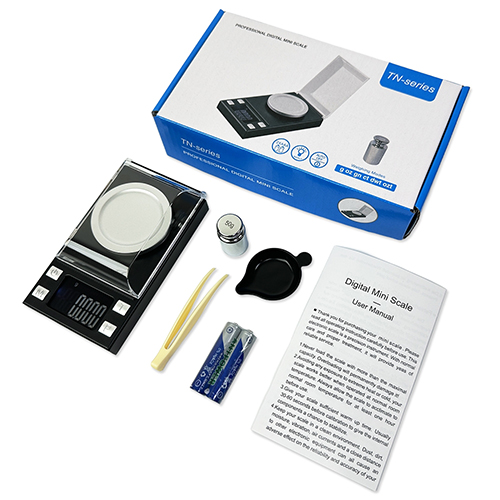
In the jewelry and precious metals industry, weighing accuracy directly determines the fairness of transactions and business credibility. A 1-carat diamond weighs 0.2 grams. If a jewelry scale has an error of just 0.01 grams, this represents a 5% deviation in value—for high-value gemstones, such an error is sufficient to trigger transaction disputes or even legal risks.
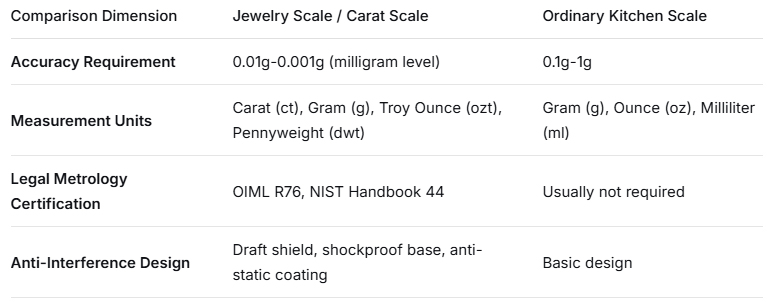
According to global industry standards, the core differences between jewelry scales and carat scales and ordinary household electronic scales lie in:
Therefore, for international trade buyers, jewelry retailers, and precious metal recycling companies, understanding the key considerations for selecting jewelry scales and international supply standards is the first step in safeguarding their business interests.
Key Consideration 1: Accuracy and Capacity—The Golden Balance Principle
Accuracy is the most critical parameter for jewelry scales and directly affects the reliability of weighing results.
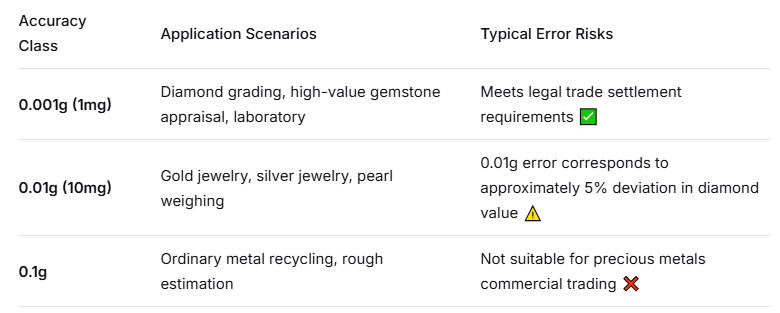
Based on industry practice, accuracy requirements vary significantly across different application scenarios.
In terms of measurement range, jewelry scales typically range from 50g to 500g, while some professional models can reach up to 1,200ct (approximately 240g). When purchasing, keep in mind that the larger the measurement range, the higher the cost of the sensor for the same level of accuracy. Professional carat scales, such as A&D’s FZ-300CT series, offer a dual-range switching capability of 310ct/62g, with a reading accuracy of 0.001ct.
Key Consideration #2: Materials and Durability—Protecting High-Value Items
The materials used in a jewelry scale directly affect measurement stability and service life.
Weighing Plate Material: Stainless steel or tempered glass are the best choices, as they are scratch-resistant and corrosion-resistant. Models with an antistatic coating prevent dust from adhering to the surface and affecting measurements. Ceramic-coated weighing plates are gentler on jewelry surfaces and less likely to leave scratches.
Body Construction: A fully cast aluminum or metal body provides better vibration resistance, making it suitable for high-traffic environments such as jewelry stores. While plastic housings are lightweight, they are prone to warping over time, which can cause accuracy drift.
Draft Shield Design: Professional carat scales are equipped with easily removable, curved draft shields that effectively block airflow interference and ensure stable readings. In air-conditioned environments or at open counters, a draft shield is an essential feature for maintaining repeatable accuracy.
Foreign Trade Supply Standards: What Do Overseas Buyers Look For?
Based on an analysis of global B2B buyers of jewelry scales on the Alibaba platform, overseas buyers focus on the following criteria when screening jewelry scale suppliers:
Evaluation Criteria Overseas Buyer Standards
Accuracy Compliance Does the supplier hold OIML R76 or NIST certification?
Production Capacity and Lead Time On-time delivery rate ≥ 95%, response time ≤ 3 hours
Customization Capabilities Supports logo screen printing, custom molds, and custom packaging
After-Sales Support Warranty period ≥ 12 months; calibration technical support provided
China has become the world’s primary manufacturing hub for high-precision jewelry scales, forming an industrial landscape characterized by an innovation and R&D cluster in Guangdong (Shenzhen, Dongguan) and a cost-effective manufacturing cluster in Zhejiang (Yongkang, Ningbo).
About Us: Shenzhen Kefeiya Technology Co., Ltd.
Shenzhen Kefeiya Technology Co., Ltd. has been deeply involved in the electronic scale and measuring instrument industry for 12 years. Located in Shenzhen, Guangdong, the company owns a 6,500-square-meter factory, employs over 200 experienced staff members, and is equipped with more than 70 large-scale production machines, with a daily production capacity of up to 10,000 electronic scales and measuring instruments. The company maintains a complete in-house industrial chain, ranging from mold development, injection molding, and metal stamping to finished product assembly. Our entire product line has passed CE, RoHS, and FCC international certifications and is compliant for export to global markets, including Europe, the United States, and Southeast Asia.
We specialize in a full range of products for all scenarios, including kitchen scales, coffee scales, jewelry scales, luggage scales, measuring spoon scales, measuring cup scales, commercial pricing scales, personal scales, body fat scales, as well as measuring instruments, environmental instruments, and electronic tools. Among these, our high-precision jewelry scales and carat scales strictly adhere to international metrology standards and support OEM/ODM customization services, including laser-engraved logos, screen-printed logos, custom molds, and functional modifications. We maintain a massive inventory of in-stock products year-round, supporting both small mixed-lot orders and bulk purchases, with volume-based pricing discounts.
Kefaya Technology sincerely welcomes global jewelry brands, procurement clients, and cross-border sellers to visit our factory for on-site inspections. We invite you to observe the entire production process—including injection molding, mold making, assembly, and quality control—and join us in creating new opportunities in international trade.