Chinese Electronic Scale and Measuring Instrument Factory


Southeast Asia Weighing Scale Demand Surges: Kitchen Scale & Luggage Scale Purchasing Guide
Booming Demand in Southeast Asia’s Weighing Equipment Market: A Guide to Importing Low-Cost Kitchen Scales and Luggage Scales
Market Overview: Southeast Asia’s Household Weighing Instruments Market Enters a Phase of Rapid Growth
Southeast Asia is emerging as one of the most dynamic growth hubs in the global weighing instruments market. By 2025, the market size for precision weighing equipment in Southeast Asia had reached approximately $4.72 billion, representing a growth of over 38% compared to 2020. It is projected to exceed $7.68 billion by 2030, maintaining a compound annual growth rate (CAGR) of over 10%. Against the backdrop of the global household scale market—which reached $3.83 billion in 2025 and is projected to grow to $6.39 billion by 2034—Southeast Asia has emerged as a key growth market for household electronic scale exports, driven by its rapidly expanding middle class, steadily rising urbanization rates, and the benefits of manufacturing relocation.

The Asia-Pacific region already accounts for approximately 60% of the global electronic scale market, with Southeast Asian countries serving as one of the core growth drivers. As the world’s largest producer of electronic scales, Chinese weighing instrument companies are accelerating their penetration of the Southeast Asian market by leveraging their cost-effectiveness and localized operational strategies.
Explosive Growth in Specific Categories: Strong Demand for Kitchen Scales and Luggage Scales
Within the household weighing instrument category, kitchen scales and luggage scales are emerging as the two top-selling product categories in Southeast Asia’s cross-border e-commerce sector.
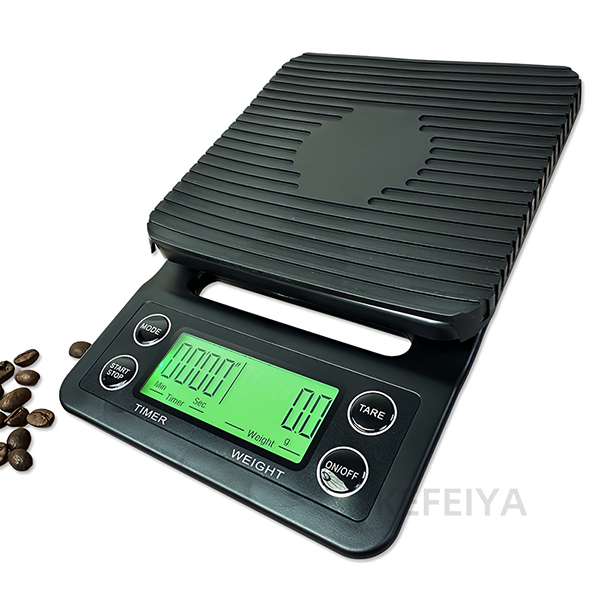
Regarding kitchen scales, global kitchen scale applications account for 22.4% of the household scale market. As Southeast Asian consumers place greater emphasis on cooking precision and nutritional management—coupled with the spread of food culture on social media—demand for kitchen scales continues to rise. Digital kitchen scales, capable of measuring with an accuracy of 0.1 grams or higher and featuring functions such as tare and unit conversion, are evolving from professional tools into standard household items. Vietnam’s electronic weighing equipment market has shown significant growth, and kitchen scales have been included in market monitoring as a key category.
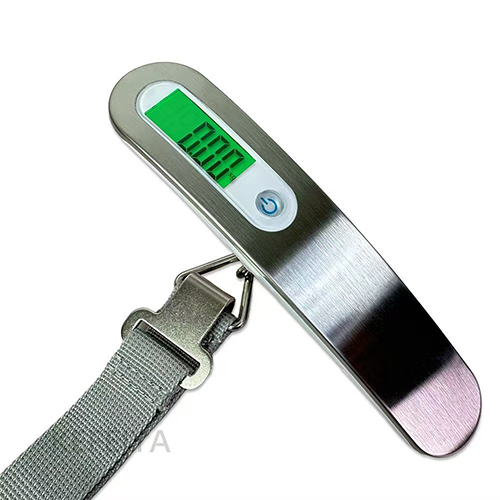
As for luggage scales, this category accounts for 11.2% of global household scale usage. As an international tourism hub with high air travel frequency, Southeast Asia has made luggage scales a necessity, as they help travelers avoid overweight fees. Portable hook designs, high-precision sensors, and durable casings are the core requirements for luggage scales in the Southeast Asian market. According to supplier data, the Southeast Asian market already accounts for 12% of the export share of some Chinese weighing instrument companies.
Regional Market Characteristics and Procurement Opportunities
Market demand varies across Southeast Asian countries:
Thailand: As a manufacturing hub in Southeast Asia, the market for precision weighing equipment is projected to reach approximately $1.53 billion by 2025, with the automotive and electronic components industries driving demand for high-quality weighing instruments. The household scale market is benefiting from Thailand’s Industry 4.0 policy and the development of the Eastern Economic Corridor, leading to steady growth in demand.
Vietnam: Driven by the relocation of foreign-invested manufacturing and food export compliance requirements, procurement of electronic weighing equipment has grown by 14% year-over-year. Vietnam’s electronic weighing equipment market is expanding rapidly alongside the growth of trade and manufacturing.
Indonesia: The mining industry and trade in bulk agricultural products are driving demand for logistics weighing solutions, while the expansion of the urban middle class is fueling consumption of household kitchen scales and luggage scales.
Malaysia and the Philippines: The semiconductor, chemical, and port logistics sectors are shaping distinct demand patterns, and the household weighing instrument market is growing alongside the expansion of cross-border e-commerce channels.
Guide to International Sourcing: Low-Cost Product Selection Strategies and Supply Chain Selection
For international buyers and cross-border e-commerce sellers, the following strategies may serve as a reference:
1. Product Selection Focus
Kitchen Digital Scales: Focus on 0.1g accuracy, USB charging, stainless steel weighing surface, and waterproof/dustproof design; recommended price range: $5–$15
Luggage Scales: Focus on a 50kg capacity, hook-style portable design, and LED backlit display; recommended price range: $3–$10
Differentiated Features: Smart kitchen scales with Bluetooth connectivity and app data synchronization are rapidly gaining traction in Southeast Asia; consider targeting the high-end segment
2. Channel Strategy
Cross-border e-commerce platforms (Shopee, Lazada, TikTok Shop) have become the primary sales channels for household scales in Southeast Asia
For offline channels, large supermarkets and specialty retailers in Thailand, Vietnam, and Indonesia remain key distribution points
3. Compliance Key Points
Countries across Southeast Asia are gradually implementing mandatory metrology verification regulations. Thailand’s Industrial Standards Institute (TIS) updated its verification standards for non-automatic weighing instruments in 2025, requiring higher accuracy grades.
Pay close attention to product certification requirements in target markets (e.g., Thailand’s TIS, Indonesia’s SNI). Exported products must hold international certifications such as CE, RoHS, and FCC to ensure smooth customs clearance
4. Supply Chain Advantages: The Key Value of Selecting Source Manufacturers
Selecting source manufacturers of electronic scales with OEM/ODM capabilities can significantly reduce costs associated with intermediaries and enhance price competitiveness.
Suppliers with flexible customization capabilities—such as custom molds, laser-engraved logos, and screen-printed logos—can better meet the differentiated needs of brand owners.
A supply model combining spot wholesale with small-lot mixed batches can effectively reduce inventory pressure and lower the procurement threshold for cross-border merchants.
Outlook: Smart Technology as the Next Growth Driver
By 2025, shipments of smart weighing devices in Southeast Asia accounted for 29% of the total market, and this figure is projected to exceed 52% by 2030. IoT and edge computing technologies are rapidly being integrated into household weighing devices. Smart kitchen scales and luggage scales that support remote calibration, cloud data storage, and app connectivity will become the core drivers of growth in the next phase. For Chinese weighing instrument companies planning to enter the Southeast Asian market, seizing both the opportunities for scale production in low-cost product categories and the opportunities for differentiation through smart products is essential to gaining a competitive edge in this rapidly growing market.
About Us: Shenzhen Kefeiya Technology Co., Ltd.
Shenzhen Kefeiya Technology Co., Ltd. has been deeply involved in the electronic scale and measuring instrument industry for 12 years. Based in Shenzhen, Guangdong, and leveraging China’s manufacturing ecosystem and Guangdong’s hardware and electronics supply chain, the company specializes in the R&D and production of kitchen scales, coffee scales, jewelry scales, luggage scales, measuring spoon scales, measuring cup scales, commercial pricing scales, personal scales, body fat scales, as well as measuring instruments, environmental instruments, and electronic tools. Our products cover a wide range of scenarios, including household weighing, baking and beverages, jewelry weighing, logistics and travel, and health monitoring.
The company owns a 6,500-square-meter factory and employs over 200 experienced staff members. Equipped with more than 70 large-scale production machines, it has a daily production capacity of up to 10,000 electronic scales. With full-chain independent production—including in-house mold development, injection molding, metal stamping, and finished product assembly lines—all products have passed CE, RoHS, and FCC international certifications and are compliant for export to global markets such as Europe, the United States, and Southeast Asia. We offer OEM/ODM customization services, including laser-engraved logos, screen-printed logos, custom molds, and functional modifications. We also maintain a large inventory of in-stock products year-round, supporting both small mixed-lot orders and bulk purchases, with volume-based pricing discounts.
Kefaya Technology sincerely welcomes domestic and international buyers, brand owners, and cross-border sellers to visit our factory for on-site inspections. We invite you to observe the entire production process—including injection molding, mold making, assembly, and quality control—and join us in creating new opportunities in international trade.